Can Missing Teeth Change the Way You Chew? Understanding the Effects of Tooth Loss
Have you started chewing on one side of your mouth since losing a tooth?
It can happen without much thought. You lose a tooth, adjust how you eat for a while, and before long, that new habit feels normal. Maybe you avoid tougher foods. Maybe you notice food getting stuck in the empty space. Or perhaps your bite just doesn't feel quite right anymore.
A missing tooth can affect how the rest of your mouth works. The change may be small at first, but the teeth around the gap can shift, chewing pressure can move to different areas and the way your upper and lower teeth meet may change.
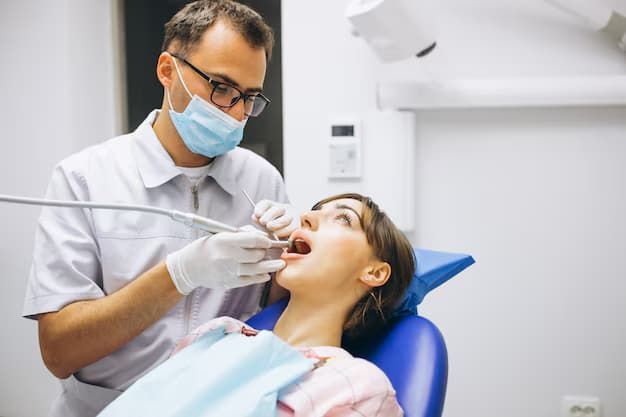
At Martinez & Martinez Family Dental Care, we look at more than the gap itself. We want to know how the missing tooth is affecting the rest of your bite and what condition the surrounding teeth, gums, and jawbone are in. That information matters when deciding what to do next.
Why Does Losing One Tooth Change the Way You Chew?
Your teeth don't work separately. They work together whenever you bite into an apple, chew a sandwich, or eat something that needs a little more effort.
A missing back tooth, for example, can leave less chewing surface on one side of your mouth. You may naturally start using the other side more often. It's a small adjustment, but if you keep doing it for months, you may stop noticing that you're doing it at all.
The teeth around the empty space can change position, too. A tooth next to the gap may gradually lean into it. The tooth directly above or below the space can also move.
That can change your bite.
And no, you won't necessarily feel pain. Sometimes the first clue is much simpler. Your food doesn't seem to break down as easily, or your teeth don't meet the way they used to.
What Can Happen Around a Missing Tooth?
There isn't one set timeline for what happens after tooth loss. Some people notice changes fairly quickly. Others don't notice anything for quite a while.
Still, a few things are worth keeping an eye on:
- Nearby teeth may shift. Teeth beside the gap can move toward the open space, which may change spacing and make some areas harder to clean.
- The opposing tooth may move. The tooth above or below the gap no longer has the same contact so it can gradually move farther into the space.
- Chewing pressure can change. Remaining teeth may end up doing more of the work, especially if you favor one side.
- Food may get trapped more often. A new space or altered tooth position can make certain areas annoying to keep clean.
- The jawbone can change. After a natural tooth root is lost, the bone in that area no longer receives the same stimulation and may gradually lose volume.
- Your bite may feel different. Even a relatively small change in tooth position can affect how the upper and lower teeth come together.
These changes aren't guaranteed. Your age, oral health, the location of the missing tooth and the condition of the surrounding area all play a part.
How Can Tooth Loss Affect Your Bite?
Think about what happens when you close your mouth. Your upper and lower teeth come together at specific points. Those contacts help distribute pressure while you chew.
Remove one tooth from that setup and the pattern can change.
A neighboring tooth might tip toward the gap. An opposing tooth might move into the space. You may begin putting more pressure on one side of your mouth without even realizing it.
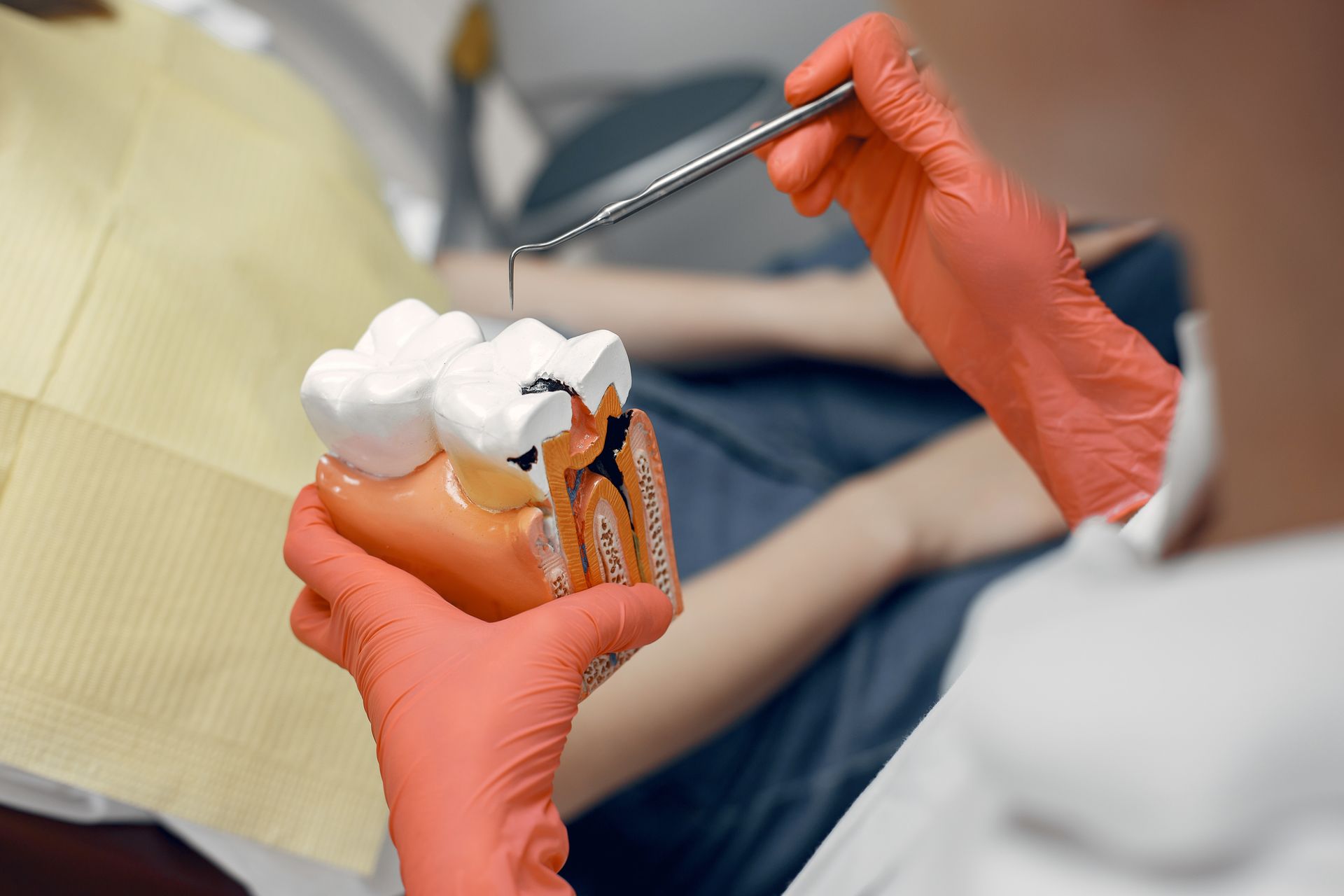
This is one reason we don't look at a missing tooth as an isolated problem. During an examination, we look at how the surrounding teeth are positioned and how your bite is functioning.
If your bite feels different after losing a tooth, it's worth mentioning at your appointment. So is frequent food trapping or a new habit of chewing on only one side.
What Are Your Tooth Replacement Options?
There isn't one treatment that works for every missing tooth.
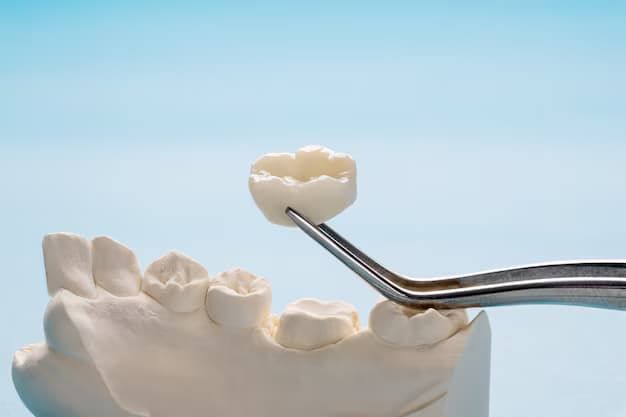
Tooth replacement options can include dental implants, bridges and dentures. The appropriate choice depends on where the tooth is missing, the condition of the surrounding teeth and gums, available bone, and what you want from treatment.
A dental implant replaces the root portion of a missing tooth and supports a restoration above the gumline. When an implant is being considered, dental imaging can help us examine the bone and anatomy around the treatment area.
A dental bridge works differently. A replacement tooth is supported by neighboring teeth, which means the condition of those teeth matters when planning treatment.
Dentures can replace multiple missing teeth or a larger number of teeth. In some situations, implant-supported dentures may be an option as well.
The point is simple: the empty space doesn't tell us everything we need to know.
What Do We Look At Before Treatment?
At Martinez & Martinez Family Dental Care, we don't start with a procedure and work backward. We start by looking at what's happening in your mouth.
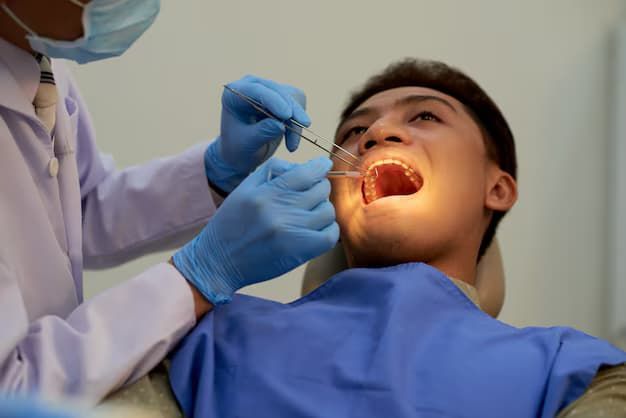
During an evaluation, we may look at:
- The location and number of missing teeth
- The health of the surrounding gums
- The condition and position of nearby teeth
- Available jawbone in the area
- How your upper and lower teeth meet
- Existing dental restorations
- Your oral hygiene and general dental health
- What you want to accomplish with treatment
That last point matters.
Someone may mainly want to eat comfortably again. Another person may be more concerned about appearance. Someone else may want to avoid future problems around a missing tooth. Those concerns can lead to different conversations about treatment.
For patients considering implants, imaging can also help us determine whether there is enough bone support for the planned treatment or whether additional steps need to be discussed first.
Why Replacing a Missing Tooth Can Help With Everyday Function
A missing front tooth is usually hard to ignore. A missing back tooth is different. You may not see the gap when you smile, so putting off treatment can feel reasonable.
But back teeth do a lot of work.
They help break food down before you swallow it. If one is missing, you may find yourself favoring the other side of your mouth. Some people also notice that certain foods become less comfortable to chew.
Replacing a missing tooth may help restore a more complete chewing surface. It can also give the surrounding teeth a more stable arrangement, depending on the treatment and the condition of the mouth.
Tooth replacement options should therefore be considered based on function as well as appearance. A replacement that looks good but doesn't suit your bite isn't a very satisfying result.
When Should You Have a Missing Tooth Checked?
You don't necessarily need emergency dental care just because you've lost a tooth. But that doesn't mean you should ignore the space indefinitely.
It's a good idea to schedule an evaluation if:
- You have started chewing mostly on one side.
- Certain foods have become difficult to eat.
- Your bite feels different.
- Food keeps getting caught around the missing tooth.
- Nearby teeth seem to be moving.
- You're concerned about changes in the jawbone.
- You want to understand your tooth replacement options before deciding what to do.
You don't have to walk into the appointment already knowing which treatment you want. That's part of what the consultation is for.
A Personalized Approach to Tooth Replacement in Monroe
At Martinez & Martinez Family Dental Care, we don't believe every missing tooth should lead to the same treatment plan. Your mouth has its own history, and that matters.
Our Monroe practice provides general, restorative, cosmetic, and implant dentistry. That means we can look at a missing tooth in the context of your wider dental needs instead of focusing only on the empty space.
If you're considering tooth replacement options, we'll explain what may be appropriate for your situation and what each approach involves. When dental implants are being considered, imaging can help us assess the treatment area before moving forward.
We also believe patients should understand the reason behind a recommendation. You should know what we're looking at, why a particular treatment may be suggested, and what questions are worth asking.
Conclusion
A missing tooth can change how you chew long before it becomes a major problem. You might favor one side, notice food getting stuck, or simply feel that your bite isn't quite the same. We look at those small changes because they can tell us something about how your mouth is functioning. Our approach starts with an examination, not a predetermined treatment. If you've been living with a missing tooth,
we'll help you understand what may be happening and which options could make sense for your smile and everyday comfort.